
How to Choose the Perfect Jewelry Display Sets for Your Showcase
Jewellery transcends mere accessories; it is an expression of art, craftsmanship and sentiment. A carefully chosen display set not only “holds” your pieces; it elevates their beauty while drawing customer attention and reinforcing your brand identity. No matter if you own a boutique store or craft fair booth or simply curate personal collections at home – choosing an appropriate display set requires consideration of both practicality and aesthetics when aligning itself with each item you are showcasing – below is an extensive guide that can help guide this decision process.
1.Begin With an in-Depth Knowledge of Your Showcase
Before shopping display sets, take time to assess the physical constraints and design of your showcase; this is essential in finding something suitable. Ignoring these details may result in display sets being too large, too small, or visually off-putting.
A. Measure Dimensions Precisely
Utilize a tape measure and take three measurements:interieur Interior width, height and depth: To ensure that your display set (including stands, trays or risers) does not outstrip its internal space within your showcase – for instance if it has 24in width and 10in depth then 22-in wide tray with 8inch deep compartments will provide plenty of room for customers to view pieces without overcrowding it
Shelf Spacing: When setting up multiple shelves in your showcase, measure their vertical spacing to find out if any stand-in items exceed it in height. A tall necklace stand will become completely impractical if its height exceeds that between shelves.
Weight Capacity: Heavier materials like metal and glass display sets may place undue strain on shelves that have limited weight capacities, so check the showcase’s product manuals for its weight limit before selecting a display set that remains within its weight capacity range.
B. Choose Your Showcase Materials and Style
Display sets should complement, rather than clash, with your showcase’s design:
Glass showcases: These showcases exude modernism. For optimal display sets, opt for transparent acrylic displays with polished metal (stainless steel or brass) displays or matte white trays to draw attention solely to your jewellery (avoiding ornate wooden displays which may appear bulky).
Wooden showcases: These showcases add warmth and rustic charm, pairing perfectly with wooden display sets (oak, walnut) or soft velvet-lined trays. Avoid industrial-style metal displays as these may create an incongruent appearance.
Minimalist/industrial showcases: For an industrial feel, showcases with exposed metal frames or concrete bases require display sets made of black metal, clear acrylic, or leather (to add softness).
2. Select an Appropriate Display Set Not all jewelry pieces are created equal
Necklaces require different support than rings, while delicate earrings require extra care than sturdy bracelets. Your display set should reflect this diversity and ensure all your pieces remain visible and safe.
A. Rings: Prioritize Accessibility and protection
Rings can easily become misplaced, so display sets should help to keep them organized while emphasizing their features (like gemstones or engravings):
Ring Trays: For optimal use, look for trays with individual compartments (1-2 inches wide) lined with velvet, felt or suede to help prevent scratches while keeping rings upright and undamaged. Engagement or statement rings may require slightly raised compartments that draw attention to center stones of rings.
Ring stands are perfect for highlighting “hero” rings (e.g., new collection pieces). Choose single or triple ring stands made of metal or acrylic to lift rings off of shelves so customers can more easily see band details and stone sparkle.
B. Necklaces Can Prevent Tangling and Highlight Length
Necklaces can easily tangle, with choker-length necklaces more likely to do so than long pendants; their length determines which style should be displayed: choker or long pendant?
Necklace Busts/forms: Ideal for chokers, short pendants and delicate chains with delicate chain link designs, choose busts in foam (covered in velvet) or plastic–they mimic the shape of your neck to allow the necklace to drape naturally around it. For heavier necklaces with larger pendants (e.g. requiring sturdy metal busts to avoid tipping).
Necklace Trees/Racks: Perfect for longer necklaces and multiple pieces. Look for trees with evenly spaced hooks (2-3 inches apart) to avoid tangling; acrylic or metal trees work well in modern showcases while wooden trees suit bohemian or vintage brands better.
T-bar stands are an economical and minimalist way to display multiple necklaces at the same time, suitable for small showcases and easily picked up and inspected by customers. Earrings Should Also Be Protected and Visible.
C. Earrings (particularly studs or small hoops ) can become lost quickly; therefore, your display set should keep them visible and pairable.
Earring Cards + Holders: When selling stud or dangle earrings, use cardstock or velvet cards with pre-punched holes to keep pairs together. Complement this strategy with an acrylic or metal holder equipped with slots to display upright the cards allowing customers to easily compare styles.
Earring Trays: For optimal use, choose trays with small holes (for studs) or slots (for hoops) lined with foam or felt to accommodate earrings with small post posts and small hoops, respectively. Clear lidded trays may provide added protection from dust for delicate earrings with pearls or enamel designs.
Earring trees: Earring trees provide an elegant display for statement earrings with small pegs to hang them from, saving shelf space–great for showcases with limited display space.
D. Bracelets/Bangles: Offering Stability and Display
Bracelets and bangles made from flexible materials (like silver or leather) require support in order to stay in shape; to do this effectively.
Bracelet Bars: Long cylindrical metal or acrylic bars which allow customers to quickly slip bangles onto them without fear of scratching or tipping over when handling pieces by customers. For delicate bracelets, opt for velvet-wrapped bars as an additional measure against scratches; while bars with weighted bases will prevent tipping when customers handle pieces.
Bracelet Trays: These trays with curved compartments that mimic the shape of a wrist and lined with soft fabric can serve as ideal containers for stackable bracelets or cuffs, keeping pieces organized while also preventing them from rolling away.
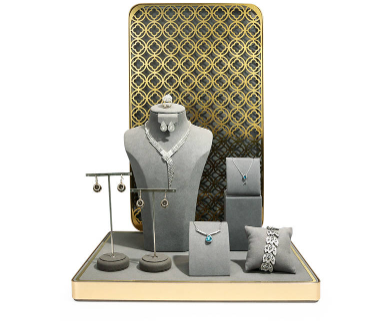
3. Evaluate Key Features of the Display Set
After narrowing your options based on showcase size and jewellery type, focus on these crucial characteristics of display sets to make sure they meet both aesthetic and durability requirements.
Aesthetics vs Durability (material selection).
Your display set’s material has an effect on its lifespan, appearance and how well it protects your jewelry:
Acrylic: Lightweight, shatter-resistant and transparent acrylic makes for the ideal showcase material, keeping all attention focused on the jewellery instead. When purchasing high-grade acrylic (thick scratch-resistant acrylic is recommended to avoid an “cheap” appearance).
Metal: Polished brass, stainless steel or black metal add a luxurious look. As metal can withstand heavier pieces without tipping over, however it must also be durable enough to support itself within your display case. Rust-prone metals (such as iron) should be avoided in humid environments (e.g. near doors and windows).
Fabric-lined (velvet, felt and suede): Soft fabrics offer protection to delicate jewellery (pearls, gemstones and enamel) against scratches and tarnish. Velvet (especially black or burgundy hues) adds luxuriousness and is often preferred by high-end diamond brands; felt is more affordable and comes in neutral tones like beige or gray for casual brands.
Wood: Wood provides an ideal base for bohemian or vintage jewellery designs. To ensure its durability, select solid wood like oak and walnut over particleboard as particleboard can warp under moisture exposure.
B. Lighting Compatibility
Jewelry looks its best under proper lighting conditions; thus your display set should complement your showcase’s lighting system (such as LED strips or spotlights):
Avoid Blocking Light: To ensure maximum lighting in your showcase, avoid tall, bulky display sets which cast shadows on lower shelves and use low-profile trays or risers instead to keep pieces within their proper light sources.
Reflect light strategically: Acrylic or metal display sets can reflect light onto your jewelry to increase its sparkle (for instance, placing a clear acrylic riser beneath a diamond ring will help reflect light back through its stones).
Make sure your light temperature matches: If your showcase uses warm light (2700K-3000K), fabric-lined displays in beige or brown will create an intimate environment, while for cool lights (4000K-5000K), acrylic or metal displays will look sleek. Avoid mixing warm displays with cool lights (or vice versa); this could cause jewellery to appear unappealingly dull.
Functionality: Ease of Use for You and Customers
Your display set should make it simple for both you and customers to interact with your jewellery: quickly restock, display, interact and interact.
Adjustability: Look for modular sets (such as stackable trays and removable risers) that allow for reconfiguring of layout as your collection shifts – this feature is especially handy if selling holiday-related pieces during winter season.
Accessibility: Display sets that feature deep compartments can make it hard for small pieces (e.g., studs) to reach easily; high shelves may benefit from risers that bring pieces closer to eye level.
Transportability: For craft fairs or pop-up sales events, choose lightweight display sets with foldable construction (e.g. necklace trees that disassemble) that are easy to transport. Security: Protect Valuable Pieces
When it comes to jewellery display sets with high value (gold, diamonds), prioritizing display sets that offer security features is of key importance: Lockable cases: Some display stands come equipped with clear lockable lids designed to protect their contents against theft or tampering.
Non-Slip Bases: Display sets featuring rubberized bases will ensure delicate items won’t move around when bumped – critical for protecting delicate pieces from falling off of their display shelves. Tamper-Resistant Designs: Avoid display sets with loose parts (e.g. removable hooks) which could easily come apart over time.
4. Align Your Display Set with Your Brand Identity
Your jewelry display sets should reflect your brand, conveying a cohesive narrative in line with each piece you sell. For example:
Luxury brands (such as fine diamond jewellery): To promote elegance and exclusivity, try velvet-lined trays, polished brass stands or glass display cases equipped with LED lighting. These materials communicate an air of class.
Bohemian brands (such as handmade jewellery): For an organic and artisanal aesthetic, select wooden display sets, macrame necklace holders or felt trays in earthy tones (terracotta or olive green) such as wood.
Minimalist brands (e.g., delicate silver jewellery): For best results when it comes to minimalist brands (such as dainty silver jewellery), display sets with clear acrylic panels or matte white or black metal finishes should be utilized. Less is more – let the simplicity of your pieces shine through.
Vintage brands (e.g., antique jewellery): To evoke nostalgia and timelessness when purchasing vintage brands (such as antique jewellery), use ornate wooden stands, velvet trays with deep colors (burgundy or navy), or brass display cases with patina that give an air of timelessness.
5. Do a Test Drive Before Making the Purchase (Where Possible)
If purchasing in person, bring along an example of your jewelry to test out the display set: Make sure each piece fits securely (e.g. ring shouldn’t wobble within its compartment; necklace shouldn’t slip off the stand).
Ascertain whether the jewellery looks best under its display’s lighting; does the set add sparkle or dim its shine? Evaluate accessibility. Is the piece easily removed without upsetting its surroundings?
If purchasing online, make sure to read reviews closely (especially regarding durability and fit). Also ensure the seller provides a return policy as this can allow you to exchange it if it doesn’t suit your showcase.
Final Thoughts
Selecting the ideal jewelry display set doesn’t just involve selecting the “prettiest” option; rather, it requires finding something that fits into your showcase, protects your jewellery pieces, and aligns with your brand. By starting with measurements, customizing each set to your jewelry type, assessing key features, and remaining true to your brand you will create a display that not only looks good but also enhances their value – not forgetting that well-designed displays allow customers to connect with them!